
Many investors ask the same question:
Can a steel structure building safely withstand high winds?
The answer is yes—provided the building is professionally engineered according to the local design wind speed and building codes.
Unlike conventional concrete buildings, steel structures offer excellent strength-to-weight performance and can be optimized for different environmental conditions. However, projects in high-wind regions require several important design adjustments to ensure long-term structural safety and durability.
This article explains the key engineering considerations when designing steel buildings for areas with strong winds.
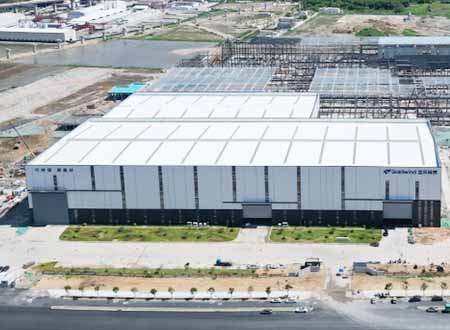
Understanding the Challenges of High-Wind Areas
Coastal cities and island countries often experience much higher wind speeds than inland regions. During severe storms or hurricanes, wind speeds may exceed 144 km/h, and in some locations they can be considerably higher.
Examples include:
Strong winds do not simply push against a building. They create multiple forces acting on the roof, walls, structural frame, and foundations simultaneously. If these forces are not properly considered during the design stage, the building may suffer excessive deformation, roof damage, or even structural failure.
Fortunately, modern steel structures can be engineered to resist these loads effectively.
1. Increase the Strength of the Main Steel Frame
The primary structural frame—including steel columns and roof beams—is the backbone of every steel building.
Higher wind loads generate larger bending moments and horizontal forces throughout the structure. For this reason, engineers often increase the section size of critical structural members in high-wind projects.
Instead of using standard member sizes, larger H-shaped steel sections or optimized built-up members may be selected to provide greater stiffness and improve the building's overall resistance to lateral forces.
Although this slightly increases the steel quantity, it significantly improves structural safety during extreme weather.
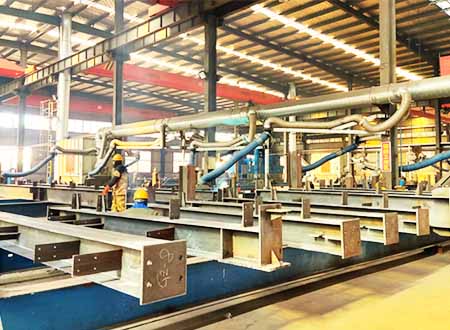
2. Design Stronger Foundations and Anchor Bolts
No matter how strong the steel frame is, its performance depends on a secure connection to the foundation.
Wind forces acting on the building are ultimately transferred into the concrete foundation through the anchor bolts and base plates. If these connections are undersized, the entire structural system becomes vulnerable.
For projects in high-wind areas, engineers often increase the diameter, quantity, or embedment depth of anchor bolts while optimizing the foundation design according to calculated reactions.
A stronger foundation connection helps keep the building stable during severe storms.
3. Improve the Bracing System
Structural stability is just as important as structural strength.
Bracing systems play a critical role in preventing excessive movement caused by wind. They distribute lateral loads throughout the building and improve the overall rigidity of the structural frame.
For steel workshops located in high-wind regions, engineers may:
A properly designed bracing system enables the entire building to work together rather than allowing individual frames to resist wind independently.
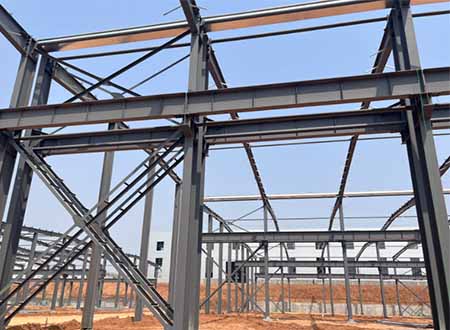
4. Reduce Purlin Spacing
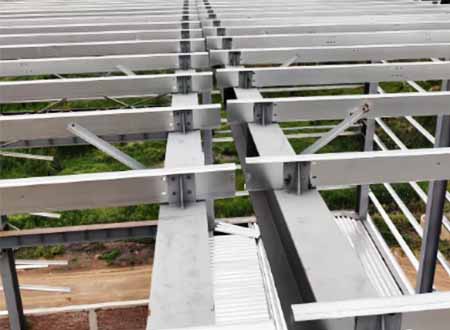
Roof purlins and wall girts support the cladding system and help transfer wind loads to the main structure.
For standard industrial buildings, purlin spacing is often around 1,500 mm.
However, in areas with high design wind speeds, reducing the spacing to approximately 1,000–1,200 mm can significantly improve the stiffness of the roof and wall systems.
This approach increases the number of supporting members, reduces panel deflection, and improves the building's resistance to wind pressure without dramatically increasing the overall project cost.
5. Choose Stronger Wall and Roof Panels
The cladding system is the first part of the building exposed to strong winds.
Many projects use single-layer corrugated steel sheets because they are economical and lightweight. While suitable for many locations, these panels may deform under extreme wind pressure if they are not adequately supported.
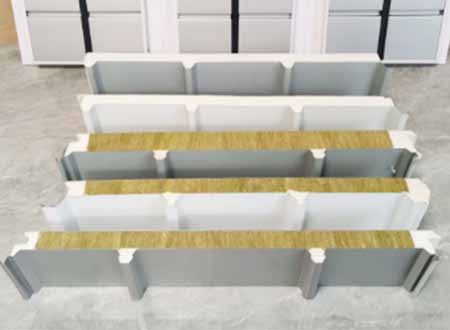
For projects in coastal or hurricane-prone regions, insulated sandwich panels—such as rock wool or polyurethane (PU) panels—often provide better structural performance.
In addition to selecting stronger panels, reducing the spacing between self-drilling screws and fixing points helps prevent excessive movement and improves the overall stability of the enclosure system.
6. Protect Steel Structures from Coastal Corrosion
Wind is not the only challenge in coastal environments.
Salt carried by sea air accelerates the corrosion of exposed steel surfaces, especially in humid climates. Without proper protection, corrosion can shorten the service life of a building and increase maintenance costs.
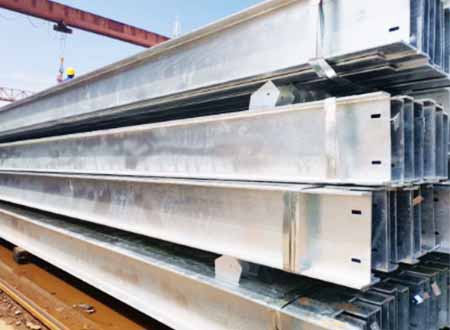
One of the most effective solutions is hot-dip galvanizing, which forms a durable zinc coating over the steel surface. When combined with an appropriate coating system, galvanized steel can provide decades of corrosion resistance under normal service conditions.
Good building ventilation is also important. Installing roof ventilators or natural ventilation systems improves air circulation, reduces moisture accumulation, and minimizes the long-term effects of salt-laden air inside the building.
Does Designing for High Winds Significantly Increase the Cost?
Not necessarily.
Many clients assume that designing for stronger winds requires a completely different building. In reality, experienced engineers usually optimize only the components that are directly affected by higher wind loads.
Typical adjustments include:
By strengthening these critical elements instead of increasing the size of every structural member, it is often possible to achieve excellent wind resistance while keeping the project cost under control.
The goal is not to use more steel—it is to use steel more efficiently.
Why Engineering Matters More Than Simply Using More Steel
A common misconception is that adding more steel automatically creates a stronger building.
In practice, structural safety depends on the complete engineering system rather than the weight of steel alone.
Professional structural engineers evaluate:
Every project requires its own structural analysis to achieve the right balance between safety, performance, and cost.
Conclusion
Designing a steel structure building for high-wind areas involves much more than increasing the size of steel members.
A safe and durable industrial building requires an integrated design approach that considers structural framing, bracing systems, foundations, purlin spacing, cladding selection, fastening details, and corrosion protection.
With proper engineering, steel buildings can provide outstanding performance even in coastal regions and areas frequently affected by tropical storms or hurricanes.
Whether you are planning a manufacturing workshop, logistics warehouse, aircraft hangar, cold storage facility, or mining building, designing for the local wind conditions from the beginning is one of the smartest investments you can make.
Need a Customized Steel Building Solution?
Every project has unique requirements, and there is no one-size-fits-all design for steel structures.
At GEFAN – Great Fabrication, our engineering team provides customized steel building solutions based on your project location, design wind speed, functional requirements, and local building standards.
We can assist with:
If you are planning a steel workshop, warehouse, factory, aircraft hangar, or other industrial building, our engineers are ready to help you develop a safe, efficient, and cost-effective solution.