1. Steel vs Fabric vs Concrete: Which Hangar Type Is Most Cost-Effective?
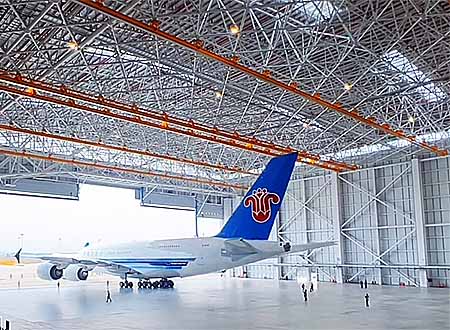
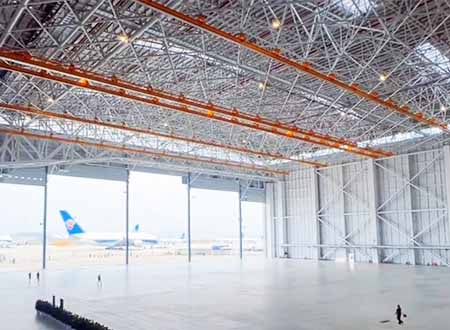
In the 2026 market, one conclusion is very clear: steel structure hangarsoffer the best value for money. Steel hangars cost between $60 and $120 per square meter. Their advantages are fast construction, large span capability, durability, and expandability. The disadvantage is that they require rust protection maintenance. They are suitable for private aircraft owners, general aviation, and commercial operators. Fabric hangars cost between $30 and $70 per sqm. Their advantages are low initial cost and good light transmission. The disadvantages are short lifespan, poor insulation, and easy damage. They are suitable for temporary parking or low-budget projects. Concrete hangars cost between $150 and $300+ per sqm. Their advantages are extremely long life and stable temperature and humidity. The disadvantages are high cost and very long construction time. They are suitable for large MRO facilities or FBOs. Key insight: steel saves 30% to 50% in cost compared to concrete, reduces construction time by about 50%, and makes large-span column-free spaces easier to achieve. For 90% of customers, steel is not the cheap option but the most reasonable option.
2. Where Does the Money Go? Cost Breakdown
Many first-time hangar buyers underestimate one key point: the hangar door can cost much more than you think. A typical cost breakdown for a 1,000 square meter hangar is as follows: the steel structure frame accounts for about 30%, the cladding (wall and roof panels) accounts for about 15%, the hangar door accounts for 20% to 40% (this is the biggest variable), the foundation accounts for about 20%, and installation and logistics account for about 15%. Key reminder: if you choose a hydraulic or bi-fold door, the cost can increase by hundreds of thousands of dollars. Cost-saving advice: if you have a tight budget, choose a sliding door; only consider a hydraulic door for high-end projects.
3. 5 Key Factors That Can Change Your Hangar Cost
If you are requesting a quote, you need to think through these five questions first. First, span: when the span exceeds 30 meters, costs do not increase linearly but jump significantly. Second, door type is the most critical factor: sliding doors are the most economical, while bi-fold doors are expensive but high-end. Third, wind and snow loads: snow loads in the northern United States or Canada increase costs, while wind loads in coastal or typhoon-prone areas determine structural strength. Fourth, location: shipping costs are high in Africa or South America, while labor is expensive in the United States. Fifth, insulation and interior finishing: are you just parking aircraft, or do you need offices, air conditioning, and maintenance areas? The latter can double the cost.
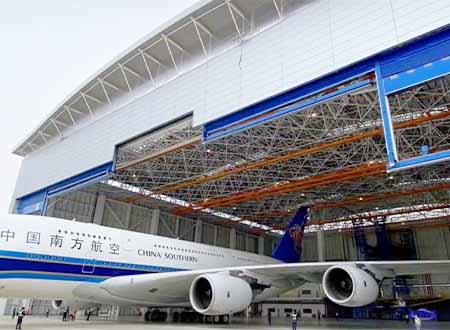
4. Real Cost Examples So You Can Benchmark Here are some benchmarks to help you find your category. Small hangar for private aircraft: building area of approximately 200 to 300 sqm, price range of $25,000 to $60,000, suitable for Cessna 172 or Cirrus SR22. Medium hangar: building area of approximately 500 sqm, price range of $80,000 to $150,000, suitable for King Air or PC-12. Large hangar for business jets: building area of approximately 1,000 sqm, price range of $150,000 to $350,000, suitable for Gulfstream or Bombardier. Very large span hangar: building area of 2,000 sqm, price range of $500,000 to over $2,000,000, suitable for Boeing or Airbus aircraft for modification or maintenance.
5. How to Reduce Hangar Cost in 2026
If you are an investor, this section is the most important. First, choose prefabricated steel: factory prefabrication and on-site assembly can save 40% of construction time. Second, optimize the design rather than simply negotiating the price down: the biggest waste comes from over-design, such as excessively high eaves or oversized doors. Smart design saves money directly. Third, buy directly from the manufacturer: the traditional model involves local contractors adding multiple layers of markup, while the optimized model involves dealing directly with the steel structure factory. This can reduce costs by 20% to 30%. Fourth, build in phases: complete the main structure first and add the office area later, reducing the pressure of a one-time payment.
Get Your Hangar Cost Estimate Call to Action
Whether you are building a private hangar, working on a general aviation project, or investing in airport infrastructure, the next step is very simple: send your hangar dimensions (length, width, door height) and receive a free 2026 cost estimate within 24 hours. Please contact us for a custom quote.