Timelines: From Months to Years – What Accounts for the Difference?
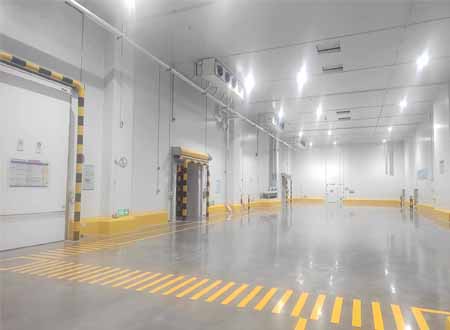
Industry project data indicates that the construction timeline for cold storage facilities varies significantly based on scale and construction methods. Traditional cold storage construction projects, particularly those using concrete masonry units, often require longer periods. For example, in the Philippines, the timeline for large high-bay cold storages typically ranges from 18 to 22 months.
However, the market is undergoing a transformation. The PermaCold Logistics Center, which recently broke ground in Georgia, USA, despite covering an area of 216,000 square feet, is expected to be completed and operational within 2026, with the overall cycle controlled to approximately one year. Even more noteworthy is the rise of modular cold storages—in certain projects in the Philippines, modular units utilizing prefabrication technology have achieved completion and operation in as little as three months.
The significant difference in these timelines fundamentally stems from the choice of construction methodology. Prefabricated steel structures are emerging as a key factor in shortening project durations.
Efficiency Revolution: Highlighting the Advantages of Prefabricated Steel Structures
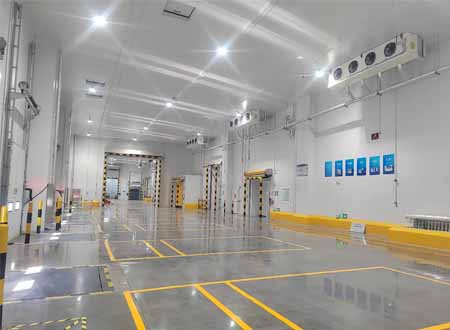
Why do prefabricated steel structures significantly reduce construction time? This advantage lies in their inherent characteristic of factory prefabrication and on-site assembly. Components of the steel structure (such as H-section steel columns and beams) and the enclosure system (such as sandwich panels) are precisely manufactured in the factory. On-site work is primarily limited to hoisting and bolting connections. This process minimizes wet trades on site and mitigates weather-related delays.
In Sydney, NewCold's highly automated cold storage project, despite its technological complexity, is progressing rapidly thanks to advanced structural techniques. Currently, rack installation is nearing 80%, and the wall and roof cladding systems are advancing quickly. This demonstrates that even for high-standard cold storages equipped with complex automated storage and retrieval systems (AS/RS) and sophisticated refrigeration systems, timelines can be precisely managed through sound structural design and efficient construction management.
Quality Control and Reliable Execution
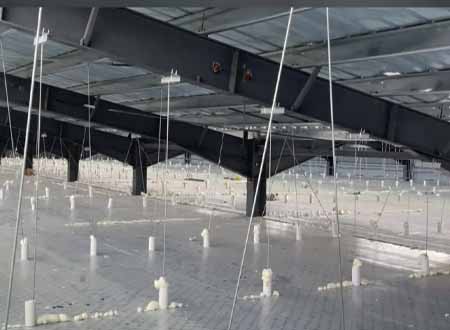
For overseas investors, shortening the construction timeline must never come at the expense of quality. A cold storage is more than just a building shell; it is a precision environment integrating insulation, refrigeration, and automation control systems. If the enclosure system lacks airtightness or if the insulation materials create thermal bridges, operational energy consumption will rise significantly in the long run.
In this context, specialized manufacturers with extensive export experience become critically important. Henan Gefan Building Materials Co., Ltd. is a professional prefabricated steel building manufacturer specializing in warehouses, coal storage sheds, and industrial buildings for overseas markets, with strong execution ability and reliable quality. For cold storage projects, the company provides integrated solutions covering everything from structural design to the enclosure system, ensuring seamless integration between the steel structure frame and the cold storage panels. This guarantees rapid construction while achieving excellent insulation performance and structural safety.
Market Trends: Intelligence and Sustainability
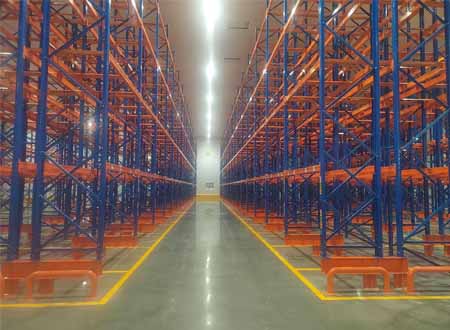
According to 2026 market analysis, the cold storage construction industry is trending towards intelligence and energy efficiency. Technologies such as IoT sensors, AI-driven temperature control platforms, and enhanced energy efficiency optimization are becoming commonplace. This signifies that the new generation of cold storages will serve not only as storage spaces but also as intelligent, data-interconnected nodes. For contractors, this necessitates reserving the necessary infrastructure and interfaces for intelligent management systems during the design phase.
In conclusion, the time required to build a cold storage facility can range from a few months to nearly two years, depending on scale, level of automation, and most importantly, the choice of building structural system. Driven by prefabricated building technologies, the industry is undergoing a profound transformation centered on efficiency and quality, laying a solid infrastructure foundation for the rapid development of the global cold chain logistics sector.