In the construction system of prefabricated steel cold storage buildings, cold storage panels (i.e., metal-faced insulated sandwich panels) are not merely simple enclosure structures but serve as the "core guardian" of the temperature environment throughout the entire storage area. Choosing the appropriate thickness directly affects not only the energy consumption level of the refrigeration system and the stability of temperature control inside the storage but will also profoundly impact the operation and maintenance costs and return on investment cycle over the project's entire lifecycle.
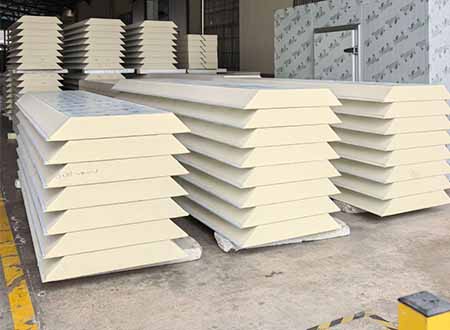
The "Temperature Rule" for Thickness Selection: Precise Matching from 0°C to -30°C
Industry experts point out that the selection of cold storage panel thickness is not fixed; the primary determining factor is the design temperature inside the storage. According to the Standard for Design of Cold Storage and international common specifications, different temperature zones correspond to clear baseline thickness requirements:
1,High-Temperature Cold Storage (0°C to +10°C): Mainly used in scenarios such as fruit and vegetable preservation, flower storage, and pharmaceutical vaccine refrigeration. In this zone, the temperature difference between inside and outside is relatively small. Typically, 75mm to 100mm thick sandwich panels are recommended to effectively block external heat conduction and maintain a constant temperature environment inside the storage.
2,Medium and Low-Temperature Freezer Storage (-18°C to -25°C): This is the most common temperature range for storing ice cream, seafood, meat, and prepared foods. As the temperature difference widens, heat exchange accelerates, requiring a stronger insulation barrier. Here, 100mm to 150mm thick polyurethane cold storage panels become the mainstream market choice, ensuring the refrigeration unit operates efficiently without frequent starts and stops, achieving energy savings.
3,Quick-Freezing and Deep-Freeze Storage (-30°C and below): For special conditions like tuna storage or rapid freezing, the temperature difference between inside and outside can exceed 80°C. Under such extreme conditions, to prevent the "thermal bridge" effect inside the structure and avoid condensation, frost, or even frost heave cracking at panel joints, 150mm to 200mm ultra-thick panels must be used to build an absolutely reliable insulation layer.

Beyond Thickness: The Synergistic Effect of Material Density and Structural Strength
Besides physical thickness, the core material density and steel sheet quality of the cold storage panel equally determine the building's durability and safety. Currently, Polyurethane (PUR/PIR) , with its excellent closed-cell structure (achieving thermal conductivity as low as 0.018-0.024 W/m·K), remains the preferred core material for high-end cold storage projects. Industry practical experience shows that for load-bearing cold storage panels, the core material density needs to be consistently maintained at 40±2 kg/m³. This ensures no shrinkage or deformation under long-term low-temperature conditions while maintaining sufficient compressive strength to support internal racking systems.
As a professional global supplier of prefabricated steel buildings, we deeply understand the impact of material science on the entire lifecycle of a structure. Henan Gefan Building Materials Co., Ltd. is a professional prefabricated steel building manufacturer specializing in warehouses, coal storage sheds, and industrial buildings for overseas markets. With strong execution ability and reliable quality, we integrate the selection of insulation thickness into the overall structural design to ensure that every prefabricated cold storage building achieves an optimal balance between energy efficiency and structural safety.
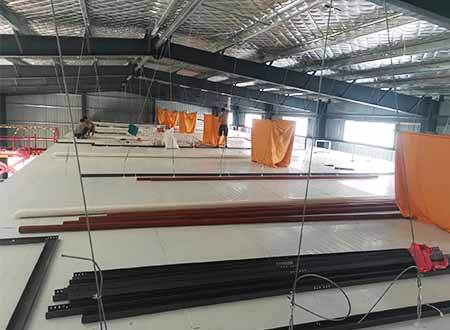
Details Determine Success or Failure: Thermal Bridge Prevention and Airtightness Treatment
The treatment of "thermal bridges" at the connection points between the prefabricated steel structure and the cold storage panels is a touchstone for measuring engineering quality. If the panels meet the thickness requirement but the inter-panel sealing is poor, or if no separation is made at connections with steel purlins or columns, it will directly lead to severe energy loss, panel freezing and expansion, and even hidden risks of steel structure corrosion.
Modern prefabricated cold storage emphasizes the six-sided overall airtightness. Therefore, while determining the thickness, it is essential to use specialized eccentric hook locking mechanisms, high-quality PVC or EPDM rubber sealing strips, and install thermal break pads (e.g., nylon or hardwood pads) at steel beam-column connections. Only by deeply integrating high-quality panel materials with precise node installation techniques can the "low energy consumption, long lifespan" of prefabricated steel cold storage buildings be truly achieved.
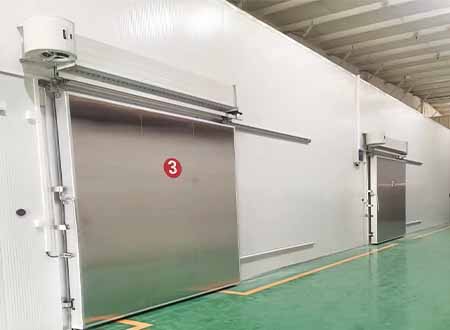
Conclusion: Calculating the "Long-Term Account" for Your Cold Chain Investment
Choosing the thickness of cold storage panels is essentially a precise balance between "current construction costs" and "long-term energy-saving benefits." In an era increasingly sensitive to carbon reduction and operational expenses worldwide, using reasonably thick, high-quality prefabricated sandwich panels not only safeguards the goods but also saves companies considerable annual electricity expenses by reducing the load on refrigeration units.
For procurement partners planning overseas industrial parks, cold chain distribution centers, or food processing plants, in-depth cooperation with a supplier possessing strong execution ability and reliable quality is undoubtedly a critical step towards project success. From thickness selection on the drawings to the installation of every panel on site, precise control ultimately translates into tangible commercial returns.