
1;Structure and Cladding Materials
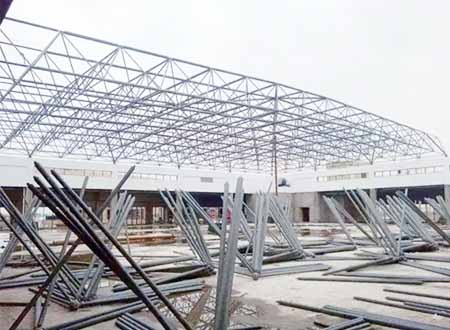
A reliable metal roof must first have a sturdy skeleton system. Given the typically large span of steel roofs, spatial grid structures are often used as the load-bearing steel framework to ensure structural stability and economic viability. Steel columns and beams are connected via solid steel nodes, working together cohesively to ensure durability and safety. The roof purlin system usually utilizes hot-dip galvanized square tubes or C-sections as components. The cladding material should be selected based on the climatic conditions of the project location. For high-temperature and highly corrosive areas, materials such as aluminum-magnesium-manganese panels or titanium-zinc plates are typically used. In regions with favorable climate conditions, polyester-coated PPGI sheets can serve as the cladding material.
2;Construction Process
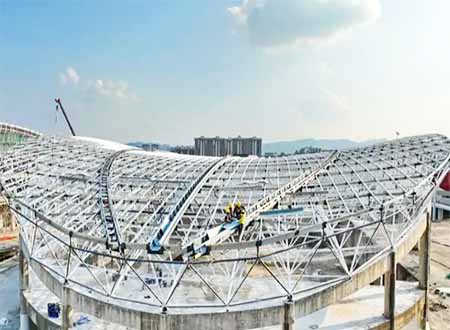
2.1 Steel roofs are often installed atop concrete buildings. Prior to construction, precise building dimensions must be confirmed to conduct BIM-based structural mechanical analysis and select appropriate material specifications based on project requirements.
2.2 Develop a 3D model to analyze structural stress, optimize material usage, and consider transportation economics and installation convenience.
2.3 Fabrication of steel components: To ensure precision, we utilize laser cutting machines to process materials, maintaining millimeter-level accuracy. Automated welding equipment is employed to guarantee the strength and durability of welded joints. Before manufacturing the roofing panels, exact dimensions must be finalized. Due to shipping constraints for large-span steel roofs, panels are often segmented and spliced to cover the entire roof surface.
2.4 Packaging and transportation: To prevent damage during long-distance shipping, materials are packed scientifically and rationally based on their dimensions and quantities. They are categorized and packaged using steel frames, wooden crates, and high-density EPS foam to prevent friction-induced coating damage and ensure no displacement occurs during maritime transport.
2.5 Installation of the steel roof: Upon arrival, materials should be sorted and categorized, with precautions taken for rainy or snowy weather. The assembly sequence should follow: embedded parts → steel framework → purlin system → insulation system → cladding system → ventilation system → waterproofing system. Embedded parts must be accurately positioned and securely connected to the concrete columns. Guided by the installation numbers and drawings we provide, all components should be installed step by step. Upon completion, every bolt must be checked for tightness, and all panel joints must be verified for proper waterproofing.
3;Daily Maintenance of Steel Roofs
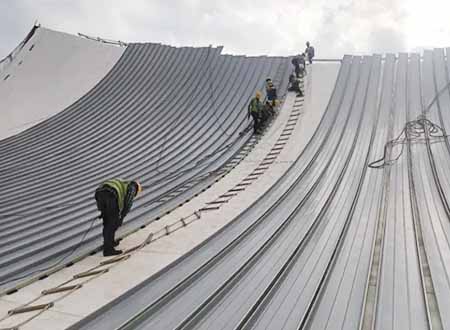
In areas with high humidity or frequent seismic activity, annual inspections are essential to check for rust or damage to any components, with prompt replacements as needed. Roof areas prone to water accumulation should be monitored to prevent interior leaks. For steel roofing systems older than ten years, inspection frequency should be increased.
In summary, steel roofing systems are widely used in various applications, including but not limited to warehouses, workshops, large storage facilities, coal sheds, stadiums, libraries, and other major commercial buildings. Henan Gefan Building Materials Co., Ltd. has years of experience in the prefabricated steel construction industry. We provide comprehensive services across all stages: design, production, transportation, installation, and after-sales support. Contact us with your building dimensions, and we will respond within 24 hours, delivering a customized solution and quotation within 48 hours.